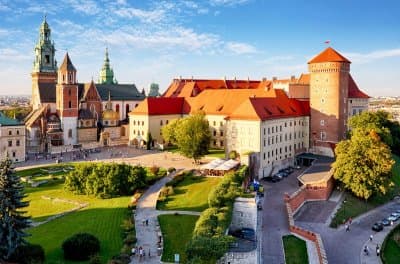
Yes — Wawel offers many facilities for visitors with limited mobility, but the grounds and some exhibitions have restrictions. The hill is hilly and some approaches are steep and paved with traditional cobblestones, so it’s best to plan your visit to move slowly and with fewer stops. Not all rooms and terraces are fully accessible — some routes require climbing steps or using platforms or lifts that are available on request from staff.
In practice this means wheelchair users can see a lot, but it’s wise to check in advance which exhibitions are fully accessible on the day of your visit and whether you should arrange staff assistance beforehand.
Book tickets in advance and choose an off-peak time (early morning or late afternoon on weekdays are usually best). If you need an external lift, stair platform or to borrow a wheelchair, inform the information desk or reservations office before you arrive — this will shorten waiting times and make getting onto the hill easier.
When planning, mention that you prefer a relaxed pace of visiting — staff can point out the easiest approaches and help coordinate entry, and in high season it’s wise to avoid weekends and busy afternoons.
The approaches from Bernardyńska Street and from Kanonicza Street are the two most commonly recommended routes for visitors needing an easier approach. The Bernardyńska approach is a vehicle access road but the surface can be uneven (cobblestones), so keep that in mind. The Kanonicza approach is shorter on foot and has a stair platform in critical spots, which helps reach the inner courtyard.
If you arrive by car with someone with reduced mobility, it may be possible to arrange a drop-off closer to the entrance — after prior phone arrangement with staff. That way you avoid walking the whole slope on foot.
There are lifts and platforms on the hill that make parts of the route easier — some lifts are operated by staff and available on request. In some underground parts and lapidaria a descent may only be possible while seated in a wheelchair (a standing person cannot be lowered), and platforms can have size limits, so check dimensions and rules in advance.
The castle also keeps a limited number of wheelchairs for borrowing during a visit — it’s a good idea to reserve or confirm availability by phone before coming. Information points also offer other helpful facilities you can ask about on site.
Not every room and exhibition is fully accessible — especially those with narrow, steep staircases or low vaults. Practically speaking you won’t be able to see every corner of the castle from a wheelchair, but you can plan a route that covers the most important barrier-free spots. Staff can advise alternative routes or point out viewing areas reachable without steps.
If a specific exhibition is temporarily inaccessible for wheelchair users (for example due to renovation or rearrangement), ask about an alternate display or the possibility to visit another part of the castle — often you can build a valuable visit this way.
Wawel and some Kraków museums sometimes offer "quiet hours" — selected times when multimedia is limited and visitors are asked to keep lower volume, creating gentler conditions for sensitive visitors and seniors. These moments are ideal for calm, slow visits without large groups or loud guides. If you need a low-stimulus atmosphere, ask at the information desk which times are designated for quiet visiting.
In practice: choose exhibitions open during those hours, come late in the afternoon, or ask about an individual, quieter entry time — staff often help tailor the route to the visitor’s pace.
There are accessible toilets and resting places on the hill — plan short breaks every 20–30 minutes, especially in warm weather or if someone has walking difficulties. Reaching terraces and courtyards often requires short crossings on uneven surfaces, so good footwear and sitting breaks help keep comfort.
If you travel with someone who has low vision or hearing loss, ask staff for alternative materials (for example audio description or sign-language support if available) or for a moment to familiarise yourself calmly with the exhibition plan.
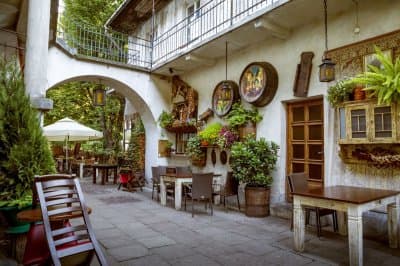
The area around Wawel offers many well-regarded restaurants and cafés — great places to rest after visiting. When choosing a venue, check entrance accessibility (steps vs ramp) and whether there’s space for a wheelchair beside the table. Pay attention to other visitors’ reviews and prefer restaurants and cafés that advertise mobility-friendly facilities.
If you plan a longer break after sightseeing, pick a place close to the outer courtyard to minimise the need to climb back up steep routes. Staff in many venues are happy to help with a wheelchair or to point out the shortest way to parking or public transport.
Not planning time for getting there and resting — Wawel is on a hill and reaching it takes more time than it seems. Schedule breaks and adopt a slower pace.
Not contacting staff in advance — if you need a lift, platform or wheelchair, call ahead or inform the information point as soon as you arrive.
Choosing peak hours — avoid the most crowded times (afternoons and weekends in season). Instead pick an early entry or the afternoon quiet hours if offered.
Can I bring an electric wheelchair onto Wawel? - Yes, many exhibitions are accessible to electric wheelchairs, but some places have size restrictions. Check with the information desk before entering.
Can I borrow a wheelchair on site? - A limited number of wheelchairs are available for borrowing; it’s best to ask or reserve in advance.
Are there quiet hours for seniors? - Wawel and some Kraków cultural institutions occasionally run quiet hours; these are good times for a calm visit. Check dates before arrival or ask at the information desk.
Many visitors don’t realise that some facilities operate on request — instead of waiting by a permanently staffed lift, announce your need in advance so staff can prepare the device and reduce waiting time.
If walking is difficult, consider arranging to be dropped off so you shorten the approach (after prior agreement) — this often saves a lot of energy and lets you enjoy a longer, more relaxed visit.
If you found this guide useful, share it with friends or on social media — it might spare someone stress during a visit to Kraków.
If you want a calmer and more personalised tour of Wawel, consider using the services of the local guide Małgorzata Kasprowicz — contact details are available on the guide’s page. Małgorzata specialises in routes adapted to the pace and needs of seniors and visitors with limited mobility.